

Pear-Shaped Diamonds: Soft Curves, a Striking Point
A teardrop silhouette with unmistakable personality. Learn how to compare pear diamonds and create a setting that celebrates their shape.
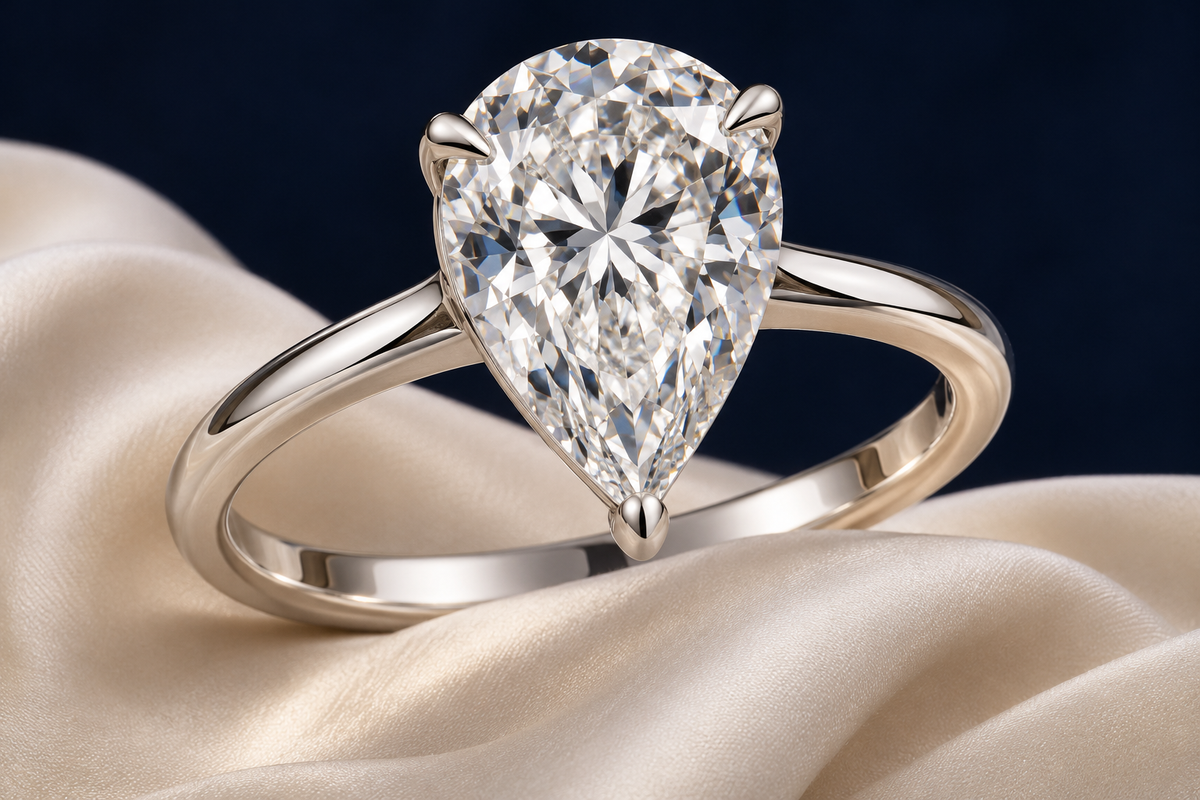
A pear diamond balances two very different gestures: the softness of a rounded end and the precision of a single point. Together, they create a silhouette that feels expressive and personal.
What is a pear-shaped diamond?
A pear-shaped diamond has one rounded end and one tapered point. It is often called a teardrop shape. Pear brilliants combine that distinctive outline with brilliant-style facets; the specific facet arrangement and proportions influence each stone’s appearance.
What gives pear diamonds their character?
Pears can feel delicate or dramatic without changing their basic identity. A fuller outline brings more visual softness, while a longer outline emphasizes direction. In a ring, the point creates a natural focal direction; in earrings and pendants, the shape can bring a graceful sense of movement.
How to choose your pear diamond
Study the balance of the outline
Look at the diamond face up and compare the two sides of its central axis. Consider how the rounded shoulders flow toward the tip. Use the outline and your own visual preference alongside the measurements.
Ask about the pointed tip
The point deserves a setting designed to protect it. Discuss a protective prong or bezel approach with your jeweler, including how much of the outline remains visible. The complete construction matters, not simply the number of prongs.
View the center in motion
Like ovals, pear brilliants can display bow-tie contrast across the middle. Request a short video of the actual diamond in more than one lighting condition. Look for an appearance that remains attractive as the stone moves.
Try the direction before committing
You can wear a pear with its point toward or away from the fingertip, or explore an angled design. Try the proposed orientation on your hand and consider how it works with your wedding band and daily routine.
Pear diamonds vs. other shapes
An oval offers continuous curves without a point. A pear introduces a more directional silhouette. If you enjoy the pear’s length but prefer straight edges, compare an emerald-cut diamond; if you want a rounded square outline, explore a cushion. The setting can amplify or soften each shape’s character.
Explore our oval diamond guide and emerald diamond guide to compare the details.
Choosing a lab-grown diamond
Lab-grown describes origin, rather than a shape or a quality level. Ask to see the individual stone’s specifications and available grading report, confirm what is included in the complete ring, and compare the final design within your budget. Read more about lab-grown diamonds at Melden.
Pear diamond FAQs
Which way should a pear ring point?
There is no required direction. Wear it in the orientation that feels comfortable and looks right to you.
Is a pear diamond the same as a marquise?
No. A pear has one rounded end and one pointed end. A marquise has two pointed ends.
Can a pear diamond work in a solitaire?
Yes. A solitaire can highlight the teardrop outline. Discuss tip protection and setting height as part of the design.
Explore pear diamond jewelry with Melden
Discover Melden’s pear diamond collection, or bring your ideas to a bespoke consultation. We help clients in Bentonville, Centerton, Rogers, Fayetteville, and online consider proportions, settings, and personal style. For a ring, begin with our free ring sizing kit and confirm the final fit before ordering.
Your shape. Your story.
Explore the details with personal guidance from Melden Fine Jewelers.
Book a private consultationExplore pear diamond jewelryFurther reading on diamond shapes and faceting: GIA educational reference.
Editorial image illustrates a ring style. Available Melden designs and specifications may differ.