

Oval Diamonds: An Elegant Shape with Individual Character
Soft curves meet an elongated silhouette. Explore oval diamonds, the bow-tie effect, and the details that make each stone individual.
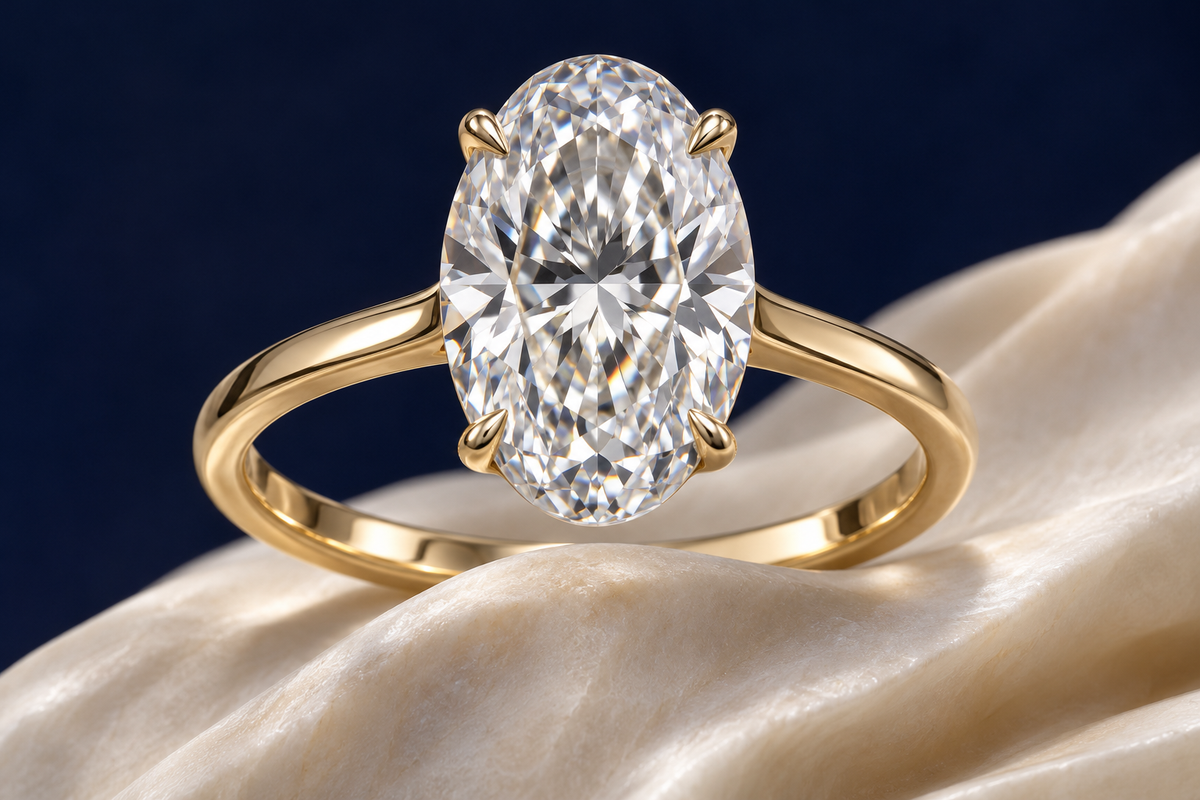
An oval diamond brings a gentle sense of movement to a ring. Its stretched silhouette can feel graceful, bold, or quietly modern, depending on the proportions you choose.
What is an oval diamond?
An oval diamond has an elongated, rounded outline. Oval brilliants use brilliant-style faceting, but stones with the same outer shape can display noticeably different patterns of light. A broad oval and a slender oval are both ovals; the right outline is the one you enjoy looking at.
What gives oval diamonds their character?
An oval can lead the eye along the finger, giving a ring an elongated presence. That is a visual effect, not a promise that every oval will look larger than every round diamond. The balance of length, width, setting, and hand size matters more than a shape name alone.
How to choose your oval diamond
Find your preferred proportions
Length-to-width ratio is calculated by dividing the diamond’s length by its width. It describes the outline, not the overall quality. Compare a few proportions side by side before deciding whether you prefer a fuller or more elongated oval.
Examine the bow-tie appearance
Some oval diamonds show a darker band of contrast across the middle, often called a bow tie. Its visibility changes with the stone and viewing conditions. Ask for a moving view in several lighting environments and decide whether the center remains visually appealing to you.
Look beyond the ratio
Check that the rounded ends and sides feel balanced. A numerical ratio cannot tell you everything about the outline or the arrangement of bright and dark areas. Look at the whole stone rather than choosing from one measurement.
Consider the orientation
A north-south setting emphasizes length along the finger. An east-west setting places the oval across the finger for a different composition. Discuss practical details such as setting height, prong placement, and wedding-band fit.
Oval diamonds vs. other shapes
Round and oval diamonds both have curved outlines, but an oval adds direction and elongation. A pear adds a pointed tip, while an elongated cushion has rounded corners with a more rectangular character. Try these silhouettes in comparable settings so the design does not overwhelm the comparison.
Explore our round diamond guide and pear diamond guide to compare the details.
Choosing a lab-grown diamond
Lab-grown describes origin, rather than a shape or a quality level. Ask to see the individual stone’s specifications and available grading report, confirm what is included in the complete ring, and compare the final design within your budget. Read more about lab-grown diamonds at Melden.
Oval diamond FAQs
Is there one ideal oval ratio?
There is no single ratio that guarantees beauty. Use the ratio to describe your preferred outline, then assess the individual stone in motion.
Does a bow tie mean an oval diamond is damaged?
No. The term describes an optical contrast pattern, not a crack or inclusion. Its visual strength varies.
Will every oval diamond look the same in a photograph?
No. Faceting, proportions, lighting, and camera angle can change the appearance. Request images or video of the actual diamond.
Explore oval diamond jewelry with Melden
Discover Melden’s oval diamond collection, or bring your ideas to a bespoke consultation. We help clients in Bentonville, Centerton, Rogers, Fayetteville, and online consider proportions, settings, and personal style. For a ring, begin with our free ring sizing kit and confirm the final fit before ordering.
Your shape. Your story.
Explore the details with personal guidance from Melden Fine Jewelers.
Book a private consultationExplore oval diamond jewelryFurther reading on diamond shapes and faceting: GIA educational reference.
Editorial image illustrates a ring style. Available Melden designs and specifications may differ.