

Cushion-Cut Diamonds: Soft Edges, Distinctive Light
A pillow-soft outline with a character all its own. Explore square and elongated cushions and the light patterns that make each stone different.
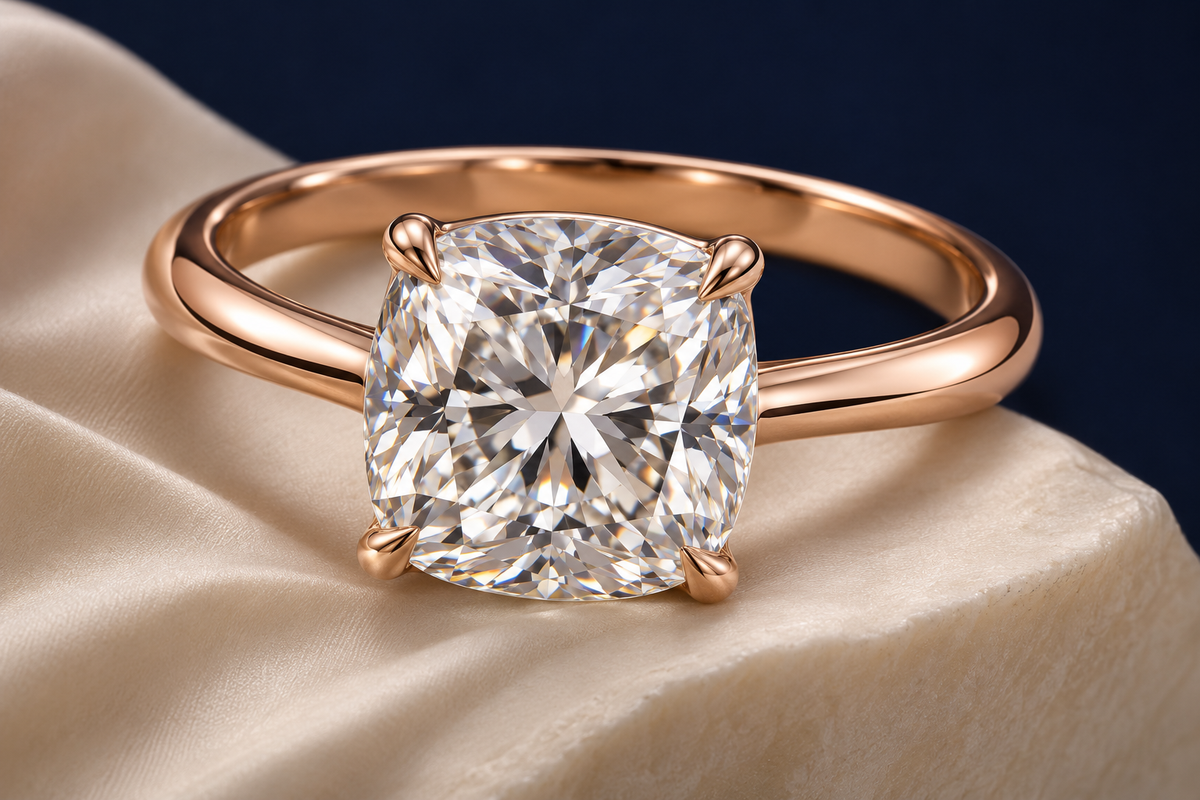
A cushion diamond softens geometry into something inviting. Its curved corners bring warmth to a square or rectangular outline, leaving room for a remarkable range of personalities.
What is a cushion-cut diamond?
A cushion-cut diamond combines a square or rectangular outline with rounded corners. The name comes from its pillow-like shape. Some cushions look nearly square; others are elongated. The outline alone does not tell you exactly how the diamond will reflect light.
What gives cushion diamonds their character?
Different cushion facet arrangements can create noticeably different visual textures. Some show more distinct flashes; others have a finer, more fragmented appearance often called crushed ice. Neither description is a universal quality grade. Compare the individual stones and choose the pattern you enjoy.
How to choose your cushion diamond
Decide between square and elongated
A near-square cushion feels balanced in both directions. An elongated cushion introduces a longer silhouette while keeping its softened corners. Ask for length and width measurements and view the proportions on your hand.
Compare the actual facet pattern
Two cushions with similar weight and dimensions can look very different. Ask to see video of the actual stones. Watch how the center and edges respond as each diamond tilts rather than relying on one bright photograph.
Check face-up size and depth together
Carat weight does not directly translate into visible width or length. Some of a diamond’s weight sits below the surface. Review the measurements alongside the appearance before assuming two cushions of the same weight will look the same size.
Choose how closely the setting follows the outline
A solitaire lets the curved square or rectangle stand on its own. A halo can add a surrounding frame. Ask whether the metal and prongs preserve the corners and proportions you liked in the loose stone.
Cushion diamonds vs. other shapes
Cushion and princess diamonds can both create a square-looking ring, but a cushion has rounded corners while a princess has sharper angles. Compared with an oval, an elongated cushion retains more of a rectangular outline. Try similar stone sizes and settings when comparing these shapes.
Explore our princess diamond guide and oval diamond guide to compare the details.
Choosing a lab-grown diamond
Lab-grown describes origin, rather than a shape or a quality level. Ask to see the individual stone’s specifications and available grading report, confirm what is included in the complete ring, and compare the final design within your budget. Read more about lab-grown diamonds at Melden.
Cushion diamond FAQs
Is every cushion-cut diamond square?
No. Cushion diamonds can be square or rectangular, with a wide range of proportions.
Is crushed ice a separate diamond shape?
No. It is a descriptive term for a visual facet pattern, not a separate outline or an automatic quality rating.
Does a cushion cut always look antique?
No. The setting and facet pattern can make a cushion feel contemporary, vintage-inspired, or somewhere between.
Explore cushion diamond jewelry with Melden
Discover Melden’s cushion diamond collection, or bring your ideas to a bespoke consultation. We help clients in Bentonville, Centerton, Rogers, Fayetteville, and online consider proportions, settings, and personal style. For a ring, begin with our free ring sizing kit and confirm the final fit before ordering.
Your shape. Your story.
Explore the details with personal guidance from Melden Fine Jewelers.
Book a private consultationExplore cushion diamond jewelryFurther reading on diamond shapes and faceting: GIA educational reference.
Editorial image illustrates a ring style. Available Melden designs and specifications may differ.